Author: Muzammil Hassan
Free Admissions Open PMYP Skills for Tomorrow Freelancing Training Program
Al Khawarizmi Institute of Computer Science (KICS), University of Engineering and Technology (UET) Lahore, is pleased to announce admissions for the PMYP Skills for Tomorrow Freelancing Training Program sponsored by Govt of Pakistan. This initiative is designed to provide youth with practical, market-oriented, and freelancing-focused skills in the fields of Artificial Intelligence, eCommerce, Digital Marketing, Graphic Design, Video Editing, Power BI, and online freelancing.
Interested candidates are encouraged to apply and complete the admission process within the announced deadline.
Offered Courses
Admissions are open in the following trades:
- AI for Everyone
- AI Powered eCommerce
- Earning Money Through Freelancing
- AI Financial Analyst with Power BI
- Graphic Design and Video Editing
- Digital Marketing & Search Engine Optimization (SEO)
These courses are designed to equip youth with practical digital, freelancing, AI, eCommerce, design, and marketing skills to improve employability, self-employment, and online earning opportunities.
Eligibility Criteria
Candidates with Intermediate or above qualification are eligible to apply for the following trades:
- AI for Everyone
- AI Powered eCommerce
- Earning Money Through Freelancing
- Graphic Design and Video Editing
- Digital Marketing & Search Engine Optimization (SEO)
For the trade AI Financial Analyst with Power BI, the eligibility criteria are different. Candidates with any of the following qualifications may apply:
B.Com, IT, BS (AI), BS Physics, BBA, BS Mathematics, M.Com, MBA, ICMA Inter, CA Inter, and PIPFA Qualified.
How to Apply
Candidates must complete the admission process in two steps:
Step 1: Fill the online application form carefully:
Step 2: Visit KICS, UET Lahore campus for submission of the admission form along with required documents.
Please fill the online form carefully, as the information provided will be used during the interview and verification process. Any misleading or incorrect information may result in cancellation of admission.
Submission Location
NAVTTC Training Office
Huawei Building, C1 Room
UET GT Road, Lahore
Google Maps Location:
https://maps.app.goo.gl/EMxTy8V3zwgX3UaB8
Office Timings
Monday to Friday: 10:00 AM to 3:00 PM
Eid Holidays: 26 May to 31 May 2026
Submission Deadline
5 June 2026
Candidates are advised to apply and submit their documents within the given deadline. Late or incomplete submissions may not be considered.
For admission-related queries, candidates may contact:
Waqas Sardar: 0332-4232521
Shahid: 0300-6804657
WhatsApp only
Kashif Bashir Office No.: 042-99250262
AquaTech Fisheries Wins $20K at NVC-2026 – Join the Inspiring Startup Showcase
AquaTech Fisheries proudly secured the First Prize of $20,000 at the NVC-2026 Finals held in April. 🎉
Continuing their inspiring entrepreneurial journey, the team will now present their innovative business idea on Saturday, May 9. Join the session to support and encourage Pakistan’s young and aspiring entrepreneurs as they showcase their vision and achievements on an international platform.
📍 Hosted by OPEN Dallas & IPPWorld
🔗 Zoom Meeting Link: https://texastech.zoom.us/j/91484224536
Let’s come together to celebrate innovation, talent, and the future of entrepreneurship in Pakistan.

KICS & MNS-UET Multan Sign MoU for Campus Solution 360 Implementation

Prof. Dr. Hafiz Shahzad Asif Appointed Director of KICS, UET Lahore
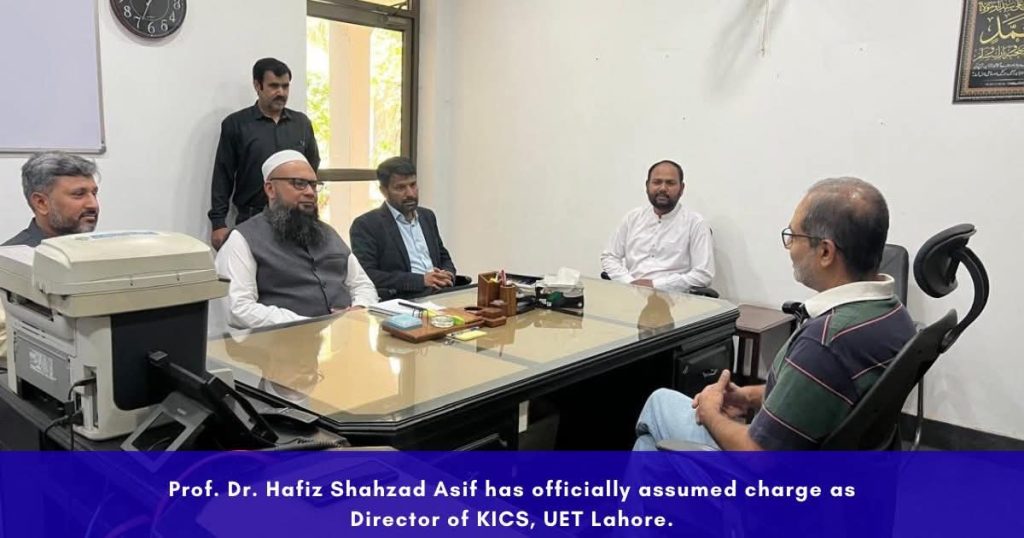
Prof. Dr. Hafiz Shahzad Asif has officially assumed charge as Director of KICS, UET Lahore, effective 24 April 2026. His appointment marks a significant step forward in strengthening the institute’s vision for excellence in research, innovation, and industry collaboration. He was warmly welcomed in his office by staff members, who extended their best wishes and support as he begins this important leadership role.
UET Lahore Hosts Lecture on “The Philosophy of Fasting and Our Social Attitudes” under Al-Khwarizmi Institute
University of Engineering and Technology Lahore organized an intellectual and academic lecture titled “The Philosophy of Fasting and Our Social Attitudes” under the auspices of the Al-Khwarizmi Institute.
The keynote speaker of the session was Dr. Tanveer Qasim, Associate Professor in the Department of Islamic Studies and Spokesperson of the University.
In his address, Dr. Tanveer Qasim stated that fasting is not merely abstaining from food and drink; rather, it is a comprehensive moral and social training system aimed at cultivating taqwa (God-consciousness) in individuals. He explained that taqwa is not limited to outward rituals or religious identity; instead, it is an inner state that enables a person to live with a constant awareness of what is lawful and unlawful in all aspects of life.

While discussing social behavior, he emphasized that if honesty, integrity, and justice do not become evident in our business dealings, social interactions, and personal conduct after Ramadan, then we must seriously reassess the impact of our عبادات. He remarked that the mere display of religious symbols in marketplaces and society is insufficient; the real requirement is practical integrity and ethical responsibility.
KICS Leadership Honored at IEEE Lahore Section AGM 2025
The Annual General Meeting (AGM) 2025 of the IEEE Lahore Section was successfully held on 18 December 2026 at Shalimar Hall, Faletti’s Hotel, Lahore. IEEE is the world’s largest not-for-profit professional technical organization, guided by the motto “Advancing Technology for Humanity.” Established in 1968, the IEEE Lahore Section is the oldest IEEE Section in Pakistan.
The AGM brought together 80 participants from academia, industry, and student communities, reflecting the growing impact of IEEE activities across the region. The proceedings were formally conducted by Syed Rizwan Naqvi, General Secretary, IEEE Lahore Section. The annual activity report was presented by Dr. Yasir Saleem, Chair IEEE Lahore Section and Associate Professor at UET Lahore, highlighting a year of impactful technical programs, professional development initiatives, and strong volunteer engagement.
A key highlight of the AGM was the recognition of leadership and technical excellence from the Al‑Khawarizmi Institute of Computer Science (KICS), UET Lahore. Kashif Bashir, Senior Manager Trainings, KICS UET Lahore, received the Outstanding Professional Award specifically in recognition of his technical leadership and exceptional contributions through the IEEE Communications Society (ComSoc) Lahore Chapter. Under his stewardship, the ComSoc Lahore Chapter delivered a significant volume of high-impact technical activities, including AI Summits, Smart City Summits, and multiple international conferences, substantially strengthening IEEE’s technical footprint, industry–academia collaboration, and global engagement in Pakistan.
In addition to this primary recognition, Kashif Bashir was also acknowledged for his previous services as Vice Chair, IEEE Lahore Section (2023–24) and for his contributions to the Chapter Coordination Committee, reflecting his sustained involvement in organizational support and volunteer leadership within IEEE. In his remarks, Kashif Bashir emphasized the importance of professional chapters as engines of technical innovation, effective knowledge transfer, and industry-aligned capacity building through globally recognized IEEE platforms.
The AGM also acknowledged the dedicated service of Shahid Zulfiqar, Senior Program Officer, KICS UET Lahore, who received formal recognition for his outstanding volunteer services as Treasurer of the IEEE Lahore Section during the 2023–24 term. His role in ensuring financial governance, transparency, and operational discipline was appreciated as instrumental in the smooth and compliant execution of Section activities. Shahid Zulfiqar is currently serving as Membership Development (MD) Chair of the IEEE Lahore Section for the 2025–26 term, continuing his active contribution to IEEE’s growth and engagement across the region.

Huawei ICT Skill Competition 2025–2026 Roadshow Awareness & Registration Session at KICS UET Lahore
The Huawei ICT Skill Competition Awareness and Registration Session organized at KICS UET Lahore on November 7, 2025, was a remarkable event that reflected the long-standing collaboration between KICS UET Lahore and Huawei Technologies Pakistan. The event began with the arrival of Huawei’s official team at the KICS reception area, where they set up an engaging registration booth. Students from multiple disciplines including Computer Science, Electrical Engineering, and Computer Engineering enthusiastically visited the booth, got registered on the spot, and received detailed guidance from the Huawei representatives regarding the registration process on the iLearning portal. The booth activity continued throughout the morning and generated great excitement among the students as they interacted with Huawei officials and collected informational materials about the competition, certifications, and upcoming training opportunities under the Huawei ICT Academy at KICS UET Lahore.
At around 11:00 AM, the formal session commenced in the KICS Seminar Hall. The event started with the recitation of the Holy Quran by Shahid Zulfiqar, Senior Program Officer at KICS and IEEE Lahore Section Treasurer. His recitation created a serene and respectful atmosphere, setting a perfect tone for the rest of the proceedings. Following the recitation, Mr. Kashif Bashir, Senior Manager Trainings at KICS UET Lahore and Chair IEEE ComSoc Lahore Chapter, delivered the welcome note and opening presentation. In his address, he warmly welcomed the Huawei team, faculty members, and students, highlighting the two-decade journey of collaboration between Huawei and UET Lahore. He elaborated on the establishment of the Huawei-UET Joint Telecom IT Centre (HUTIC) in 2002–03, where Huawei had installed equipment worth 3 million USD in its first phase, marking the beginning of a strong industry–academia partnership. Kashif Bashir also recalled that UET and Huawei signed a renewed MoU on December 31, 2004, which enabled the university to launch extensive ICT training and certification programs. Over 7,000 certifications were completed in the first decade of this partnership, helping students gain international recognition in Datacom and Cloud technologies.

In his detailed presentation, Kashif Bashir further discussed the evolution of this partnership over the years. He shared that Huawei provided an additional US$0.5 million worth of Datacom equipment in 2011, which allowed UET Lahore to become an Authorized Learning Partner for Huawei Datacom training and certification. By 2015, KICS UET Lahore had officially started offering Huawei certification programs with practical, hands-on training on campus. He also spoke about the formation of the Huawei ICT Academy (HAINA) at KICS, which became a platform for students to gain global exposure. Kashif Bashir proudly highlighted the consistent performance of UET students in the Huawei ICT Competition, recalling that UET teams represented Pakistan at the global level in 2018 after winning the national round. He mentioned that Pakistani teams, including KICS students, achieved first and second positions in the 2020 Middle East Regional Competition, earning the Huawei Excellent Partner Award that year. He went on to mention that in the following years, from 2021 to 2024, Pakistani teams continued to win global prizes, including the Grand Prize at the Regional Final held in Bahrain. Kashif Bashir concluded his presentation by emphasizing the forward-looking vision for 2025–26, including expanding the Huawei Cloud Developer Certification programs such as HCCDA Tech Essentials and Artificial Intelligence, with over 100 graduates already certified and a future target of training 300 more students at UET Lahore. He also announced KICS’s goal to increase participation in Huawei competitions and scale student employment outcomes through Huawei’s ICT Academy and iLearning resources
After the welcome presentation, Mr. Zubair from the Huawei Technologies Pakistan team took the stage. He thanked KICS UET Lahore for hosting the session and appreciated the strong collaboration that Huawei has maintained with UET for over two decades. In his engaging talk, Zubair provided a historical overview of the Huawei ICT Skill Competition and explained its purpose in bridging the gap between academia and the ICT industry. He described the competition as one of Huawei’s flagship global initiatives aimed at empowering young talent and promoting innovation in Networking, Cloud, and Computing technologies. Zubair then elaborated on the different stages of the competition, including the University Level where participants register and complete online learning modules; the National Level featuring online MCQs and practical labs; the National Final held at Huawei’s Islamabad office; and the Regional and Global Finals where top teams represent Pakistan in Asia-Pacific rounds and later compete in China. He also mentioned that participants can choose among three specialized tracks—Network, Cloud, and Computing—and that valid Huawei certifications like HCIA or HCIP provide additional points to participants. His detailed explanation helped students understand the competition structure, benefits, and preparation process, motivating many to register immediately.
Following Zubair’s session, Dr. Ali Hammad Akbar, Chairman of the Computer Engineering Department at UET Lahore, delivered an encouraging address. Dr. Ali Hammad appreciated Huawei’s continuous efforts to promote industry–academia linkage and emphasized the importance of such international platforms for student growth. He urged students to take full advantage of the Huawei ICT Competition to test and enhance their skills in networking, cloud, and AI technologies. He shared the inspiring stories of Ms. Fatima and Arfa Karim as exemplary figures in the field of ICT, reminding students that passion, discipline, and dedication can open pathways to global success. Dr. Ali Hammad’s speech deeply resonated with the audience, particularly because he linked technological learning with the legacy of young Pakistani achievers who made a mark in ICT innovation.

As the speeches concluded, the atmosphere became more interactive. The Huawei team engaged students in a lively Q&A session where participants asked insightful questions about Huawei certifications, the iLearning platform, and the competition process. The team addressed each question patiently, offering tips on how to prepare effectively and use Huawei’s online learning resources. Afterwards, Huawei representatives distributed giveaways including T-shirts, notebooks, pens, and other branded items, adding an element of excitement and appreciation for the participants’ enthusiasm. Students also had the opportunity to take individual and group photos at the booth, creating memorable moments of their participation.
The event concluded with a formal group photograph featuring representatives from Huawei Technologies Pakistan, KICS UET Lahore faculty members, and the participating students. The successful execution of the Huawei ICT Skill Competition Awareness Session once again demonstrated the strength of the collaboration between KICS and Huawei—a partnership that has consistently contributed to Pakistan’s ICT talent development. The event not only informed students about competition opportunities but also inspired them to aim for excellence in emerging digital technologies, continuing the shared vision of UET Lahore and Huawei to prepare youth for the challenges and innovations of the future.
3rd Smart City Summit 2025 Successfully Concludes at KICS UET Lahore
The 3rd Smart City Summit 2025, organized by the IEEE COMSOC Lahore Chapter in collaboration with IEEE Lahore Section, IEEE Computer Society, and the Department of Computer Engineering at UET Lahore, successfully concluded on 16th September 2025 at the Seminar Hall of KICS UET Lahore. The event brought together academic leaders, industry professionals, and students for an engaging exchange of ideas on the role of technology in shaping the future of smart cities in Pakistan.
The program began with the Recitation of the Holy Quran by Dr. Yasir Saleem, followed by the National Anthem, which set a patriotic and formal tone for the proceedings. Mr. Kashif Bashir, Chair IEEE COMSOC Lahore Chapter and Chair Chapter Coordination Committee Lahore Section, delivered the welcome note. He spoke about the growing importance of smart cities in Pakistan’s urban development and emphasized the strategic role of IEEE COMSOC in fostering innovation, collaboration, and professional growth through knowledge-sharing platforms.
In his address, Dr. Yasir Saleem, Chair IEEE Lahore Section and Vice Chair IEEE COMSOC Lahore Chapter, introduced the distinguished speakers and highlighted their designations. He also stressed the significance of volunteering within IEEE, noting that volunteering builds leadership, technical expertise, and networking opportunities, which are crucial for professional success. His remarks encouraged the audience to maximize their engagement with IEEE initiatives.
The first keynote came from Mr. Muzammil Hassan, Principal Manager at the Smart Systems Research Lab (SSRL), KICS UET Lahore, who spoke about the role of Artificial Intelligence in Smart Cities. He explained how AI can revolutionize urban systems through traffic optimization, energy management, and safety monitoring. His talk illustrated the vast potential of AI-driven solutions to address Pakistan’s most pressing urban challenges.

Next, Dr. Salman Fakhar, Branch Counselor IEEE UET Lahore and Chair PES Lahore Chapter, addressed the role of professionals in smart city concepts and their domains. He emphasized that while technology provides the foundation, the success of smart cities relies on skilled professionals who can integrate policy, infrastructure, and community needs into technical solutions.
The technical sessions followed, each adding unique insights. In Session 1, Mr. Haseeb Ahmed Janjua presented on “Smart City and the Future of Urban Mobility.” In addition to his lecture, he shared two illustrative videos with the participants. The first video highlighted the Orange Line Metro Train operations in Lahore, showcasing how mass transit can reduce congestion and improve urban mobility. The second video introduced a future project of an intercity on-road metro bus system—a vehicle designed like a train but capable of running on existing roads with automated driving features, aimed at transforming intercity travel. His session combined visionary ideas with practical demonstrations, leaving the audience inspired about Pakistan’s transport future.
In Session 2, Mr. Muhammad Fahad spoke on “Smart Enhancement in Land Record Management System of Punjab.” He began by explaining the challenges of the traditional system, where records were managed through files, manual registers, and the patwari-led land management approach. He described how this outdated system often led to inefficiencies, corruption, and lack of transparency. Fahad then showcased how Punjab’s modern digital land record system, now entirely cloud-based, has transformed governance. The new system ensures data security, accessibility, and transparency, allowing citizens to easily access their records and reducing dependence on intermediaries.
In Session 3, Mr. Muhammad Mudasser Khan spoke on “Smart Infrastructure in Campus.” He explained how academic institutions can act as pioneers of smart city solutions by adopting smart grids, IoT-based monitoring, and digital services. Using the example of UET Lahore’s ongoing initiatives, he highlighted how campuses can model sustainability and efficiency.

Later, Mr. Shahid Zulfiqar delivered a motivational talk on “Empowering Your Profile.” He guided students on building strong professional profiles by acquiring technical expertise, participating in volunteering, and highlighting achievements. He stressed the value of emerging technologies like AI, IoT, and cloud computing in shaping global career opportunities.
Before the closing, Ms. Malaika, Placement Officer from the University of Faisalabad, shared her feedback. She thanked KICS UET Lahore and IEEE COMSOC Lahore Chapter for hosting their 50-member student delegation. She praised the event’s content, technical sessions, and lab tours, emphasizing that such initiatives broaden students’ exposure and align them with future industry trends.
The event concluded with souvenir distribution, a group photo session, and a technical visit to KICS research labs, including SSRL, NWN, HPCNL, AI Lab, and the Data Center. Students actively participated in the lab tours, gaining practical insights into real-world applications of smart city technologies.
The 3rd Smart City Summit 2025 proved to be a resounding success, combining technical knowledge, professional inspiration, and student engagement. It underscored IEEE COMSOC Lahore Chapter and UET Lahore’s commitment to driving innovation and building capacity for a smarter, more sustainable Pakistan.
IEEE ComSoc Distinguished Lecture by Dr. Fatima Hussain at UET Lahore
The IEEE Communications Society (ComSoc) Distinguished Lecture by Prof. Dr. Fatima Hussain was successfully organized on Thursday, 23 October 2025, at the KICS Seminar Hall, University of Engineering and Technology (UET) Lahore. The event brought together faculty members, students, researchers, and industry professionals to explore the emerging landscape of cybersecurity and artificial intelligence. The session was part of Dr. Fatima’s Pakistan-wide Distinguished Lecturer Program (DLP) tour, which included stops at NUST Islamabad, UET Lahore, The University of Faisalabad, and Islamia University Bahawalpur.
Guests began arriving around 11:00 AM, half an hour before the official start of the event. They were warmly welcomed by Mr. Kashif Bashir, Chair IEEE ComSoc Lahore Chapter, along with his organizing team from KICS. The welcoming desk was efficiently managed, and guests were guided toward the seminar hall where refreshments were served. Faculty members from various departments, along with students from Computer Science, Electrical Engineering, and Artificial Intelligence programs, gathered in anticipation of meeting one of the world’s leading cybersecurity experts. The overall atmosphere was vibrant, professional, and filled with academic enthusiasm.
The program officially commenced at 11:30 AM with the Recitation of the Holy Quran, beautifully delivered by Dr. Yasir Saleem, Chairman of the Department of Computer Engineering at UET Lahore and Chair IEEE Lahore Section. This was followed by the National Anthem of Pakistan, performed with full zeal by the attendees, symbolizing national pride and unity.
Following the anthem, Mr. Kashif Bashir took the stage to deliver his welcome address. He began with a heartfelt “Assalam-o-Alaikum” and extended a very warm welcome to all guests, teachers, students, and participants. He expressed profound gratitude to IEEE ComSoc USA for approving this Distinguished Lecture and providing USD 2,300 in support for Dr. Fatima Hussain’s travel across Pakistan. Mr. Bashir shared that Dr. Fatima’s lecture series would cover four prestigious institutions, each contributing to academic collaboration and research in cybersecurity.
He then introduced the day’s session titled “Emerging Cyber Security Threats and Current State of Art”, co-organized by KICS UET Lahore, in collaboration with the Office of Research, Innovation and Commercialization (ORIC), the Department of Computer Science and Engineering, the Quality Enhancement Cell (QEC), and the Faculty & Staff Development Program at UET.
During his address, Mr. Bashir briefly discussed the history and mission of IEEE and its Communications Society. He explained that IEEE is the world’s largest community of engineers and technologists, with over 4.8 million members and 330 local sections worldwide. He highlighted the vital role of IEEE in Pakistan, which began in Lahore in 1968, and has since expanded into Karachi and Islamabad Sections, with Bahawalpur and Faisalabad as sub-sections.
Mr. Bashir then elaborated on the IEEE Communications Society (ComSoc), founded in 1952 and recognized globally since 1972. He noted its presence in 149 countries with 30,000 members, emphasizing its leadership in information and communication technologies. He also mentioned ComSoc’s flagship global conferences—IEEE GLOBECOM and IEEE ICC—which inspire innovation and global collaboration.
Before concluding, Mr. Bashir played a special video message from Prof. Dr. Anna Garcia Armada, Vice President of Global Services at IEEE ComSoc, who sent her greetings and appreciation for Pakistan’s active participation in the DLP program. Mr. Bashir then announced a 25% discount on IEEE Student Membership, encouraging students to join IEEE and ComSoc for just PKR 3,000, emphasizing the career and research benefits of IEEE membership. His address concluded with an invitation to welcome Dr. Fatima Hussain to the podium.

Following the welcome remarks, Dr. Yasir Saleem, Chair IEEE Lahore Section, Vice Chair IEEE ComSoc Lahore Chapter, and Chair IEEE Computer Society Lahore Chapter, addressed the audience. He began by appreciating the efforts of the IEEE ComSoc Lahore Chapter and KICS UET Lahore for organizing such a high-impact technical session under the prestigious Distinguished Lecturer Program. Dr. Yasir emphasized that the IEEE Lahore Section has always prioritized activities that bridge academia and industry, bringing global experts to Pakistan to inspire young engineers and researchers. He spoke about the growing importance of cybersecurity and AI-driven communication systems, calling them the backbone of future digital infrastructure. Dr. Yasir highlighted how IEEE’s mission—to advance technology for humanity—is reflected in such collaborative events, where international experts like Dr. Fatima Hussain share insights that shape both policy and practice. He encouraged students to actively participate in IEEE technical societies and make use of the vast global network of learning, mentorship, and innovation. Concluding his remarks, Dr. Yasir reaffirmed IEEE Lahore Section’s commitment to supporting academic excellence and nurturing the next generation of cybersecurity professionals in Pakistan.
Dr. Fatima Hussain, a globally recognized cybersecurity researcher, Principal SaaS Security Architect at the Royal Bank of Canada (RBC), and Distinguished Research Fellow at National CERT Pakistan, delivered a one-hour interactive session on Emerging Cyber Security Threats and the Current State of the Art.
The highlight of the event was the Distinguished Lecture delivered by Prof. Dr. Fatima Hussain, IEEE ComSoc Distinguished Lecturer and Principal SaaS Security Architect at the Royal Bank of Canada (RBC). Her talk, titled “Emerging Cyber Security Threats and Current State of Art,” provided an exceptionally comprehensive overview of the global cybersecurity landscape and its implications for academia, industry, and public policy. The session was not only informative but also deeply thought-provoking, offering both theoretical understanding and practical perspectives drawn from her rich experience in the financial and enterprise security sectors of North America.
Dr. Fatima began her presentation by painting a vivid picture of the rapidly evolving threat landscape that characterizes the digital era. She explained how digital transformation, virtualization, and the global shift to cloud-based services and SaaS architectures have revolutionized business operations—while simultaneously creating new vulnerabilities. She described cybersecurity as a “dynamic battlefield” where defenders and attackers are in a constant race of innovation. Citing real-world examples, she demonstrated how organizations today must manage risks not just from external actors but also from insider threats, data breaches, and third-party integrations that expose sensitive infrastructure to unforeseen vulnerabilities.

Moving deeper into the discussion, Dr. Fatima addressed the rise of Generative AI (GenAI) and its double-edged nature. She explained that while AI-driven tools can automate threat detection and enable predictive defense mechanisms, they can also be exploited to generate sophisticated phishing attacks, deepfakes, and adversarial payloads capable of evading conventional security systems. This part of her lecture captivated the audience, as she showcased how AI can be used both as a shield and a weapon in cyberspace.
Dr. Fatima elaborated on modern defense strategies that leverage artificial intelligence and machine learning to enhance enterprise resilience. She discussed how AI-enabled risk profiling systems, behavioral analytics, and anomaly detection frameworks are transforming the way large organizations monitor their digital ecosystems. Drawing from her experience at RBC, she presented case studies on implementing insider threat prevention models and compliance scoring systems, emphasizing the importance of proactive security posture management.
Her presentation also touched on AI governance, ethical frameworks, and data privacy laws, explaining how the responsible deployment of AI in cybersecurity requires a balance between innovation and accountability. She spoke about the growing global consensus around regulatory alignment, especially as countries develop data protection laws inspired by GDPR and other international standards. Her insights were particularly relevant to Pakistani researchers and policymakers exploring pathways to strengthen national cyber resilience and AI ethics frameworks.
Throughout the one-hour session, the audience—comprising UET faculty members, postgraduate researchers, and undergraduate students—remained fully engaged. Many participants took notes diligently and posed thought-provoking questions related to real-world cyber incidents, zero-trust architecture, digital identity, and privacy-preserving AI. Dr. Fatima’s ability to respond with clarity and practical wisdom impressed everyone in attendance. Her interactive style, which encouraged open dialogue, created an environment that felt less like a lecture and more like a collaborative knowledge exchange.
As the session drew to a close, Dr. Fatima shifted focus to the future of international research collaboration. She introduced the audience to Canada’s Mitacs Research and Innovation Program, which supports international students and faculty in pursuing collaborative research in cybersecurity, artificial intelligence, and cloud systems. She encouraged Pakistani students to apply for such opportunities, highlighting how exposure to global research environments can significantly enhance technical competence and cross-cultural understanding.
One of the most pivotal moments of the IEEE ComSoc Distinguished Lecture event at UET Lahore was the MoU signing ceremony, held immediately after Dr. Fatima Hussain’s lecture. This brief yet profoundly symbolic activity represented a new era of inter-university collaboration in the domain of cybersecurity, artificial intelligence, and communication technologies across Pakistan.
In this ceremony, Dr. Fatima Hussain, serving as an IEEE ComSoc Distinguished Lecturer and Principal SaaS Security Architect at the Royal Bank of Canada (RBC), formalized General Purpose Memoranda of Understanding with several leading universities of Lahore. The signatories included some of the most respected academic leaders in Pakistan’s higher education landscape:
- Dr. Kamran Abid, Dean of Electrical Engineering, University of the Punjab
- Dr. Mehtab Afzal, Dean of Computer Science, The University of Lahore
- Dr. Farooq Ahmad, Dean of Computer Science, COMSATS University Lahore Campus
- Dr. Atif Alvi, Dean of Computer Science, University of Management and Technology (UMT)
- Dr. Tahir Ilyas, Director ORIC, Lahore Garrison University (LGU)
- Dr. Yasir Saleem, representing the Department of Computer Engineering, UET Lahore
Each of these MoUs aims to establish a long-term academic and research partnership focusing on collaborative projects, joint supervision of graduate research, faculty exchange programs, and industry-driven innovation in cybersecurity and AI governance. The agreements are designed not merely as ceremonial gestures but as living documents that enable knowledge exchange between Canadian and Pakistani institutions through the active involvement of Dr. Fatima Hussain and IEEE ComSoc.
Through these MoUs, the partner universities have agreed to engage in joint seminars, training programs, and hackathons that will directly benefit students by exposing them to international standards in research methodology, cloud computing, SaaS security architecture, and risk modeling. Moreover, these collaborations open doors for capacity-building initiatives, where faculty members from Pakistani universities can co-author research papers with global experts, seek international funding opportunities, and integrate cutting-edge cybersecurity concepts into their curricula.
The significance of this initiative extends far beyond institutional collaboration—it represents a strategic national step toward strengthening Pakistan’s cybersecurity education ecosystem. The rapid digital transformation across Pakistan demands a technically skilled workforce capable of addressing emerging threats in AI-enabled environments. By connecting universities through a shared academic and research agenda, these MoUs set the foundation for what could become Pakistan’s first inter-university Cybersecurity and AI Research Alliance, under the intellectual mentorship of Dr. Fatima Hussain and IEEE ComSoc’s global network.
Furthermore, these agreements complement Pakistan’s broader vision under the Digital Pakistan Initiative, emphasizing secure digital transformation, ethical AI adoption, and industry-academia partnerships. The participating institutions will not only share research resources but also promote student mobility, enabling learners to participate in workshops and joint projects hosted at partner campuses. This inclusive approach helps reduce institutional isolation and encourages innovation through cross-disciplinary collaboration.
Dr. Kamran Abid, Dean of Electrical Engineering at the University of the Punjab, was the first to speak. He began by expressing deep appreciation to IEEE ComSoc Lahore Chapter and KICS UET Lahore for initiating a collaborative framework that connects leading universities under a single academic vision. Dr. Kamran emphasized that the University of the Punjab, being one of the oldest and most respected academic institutions in Pakistan, places strong emphasis on interdisciplinary collaboration and applied research. He noted that cybersecurity has now become a critical national concern, intersecting with almost every domain of engineering and computing. By signing the MoU, he said, these universities have not only formalized cooperation but have also set a precedent for academic solidarity in addressing Pakistan’s most pressing digital challenges. Dr. Kamran also highlighted the importance of joint graduate research, faculty development, and international linkages, affirming Punjab University’s readiness to play an active role in upcoming collaborative projects led by IEEE and Dr. Fatima Hussain.
Next, Dr. Mehtab Afzal, Dean of Computer Science at The University of Lahore (UOL), shared his reflections. He praised the initiative as a transformative step toward unifying academic efforts across Lahore’s top institutions. Dr. Mehtab highlighted how cybersecurity and AI are rapidly shaping the global digital economy, and that Pakistan must prepare its youth to contribute to this domain through skill-based education and international exposure. He commended Dr. Fatima Hussain for her inspiring lecture and for taking the lead in connecting Pakistani universities with global research networks. Dr. Mehtab elaborated that The University of Lahore has been actively encouraging cross-campus collaboration, and this MoU will further accelerate joint research publications, industry-based projects, and curriculum innovation. He also proposed forming a joint academic working group under IEEE ComSoc Lahore Chapter to ensure continuous follow-up and project alignment among all partner universities.
Dr. Farooq Ahmad, Dean of Computer Science at COMSATS University Lahore Campus, spoke next. He described the MoU initiative as a landmark in Pakistan’s academic collaboration history, symbolizing unity in purpose among institutions that traditionally operate independently. Dr. Farooq emphasized that COMSATS Lahore has long prioritized research commercialization, cyber defense innovation, and international linkages, and this agreement provides a practical avenue to deepen these priorities. He discussed how COMSATS is already leading projects in AI-based network security, data protection, and cyber forensics, and how a shared platform among universities could multiply these efforts through shared datasets, research grants, and student exchange programs. He also stressed the need to create joint postgraduate supervision frameworks, allowing Ph.D. and M.S. students from one university to collaborate with faculty from another, thereby enriching their research experience. Dr. Farooq concluded by thanking Dr. Fatima Hussain for her global mentorship and expressing confidence that her continued involvement would elevate Pakistan’s research visibility worldwide.
Finally, Dr. Atif Alvi, Dean of Computer Science at the University of Management and Technology (UMT), offered his insightful perspective. Dr. Atif began by acknowledging the visionary leadership of IEEE ComSoc Lahore Chapter for orchestrating a collaboration that bridges public and private sector universities under a unified goal of technological advancement. He described the signing of these MoUs as not just an academic formality, but as the beginning of a long-term partnership aimed at transforming research culture across Pakistan. Dr. Atif stressed that cybersecurity today is not only about protection—it’s about resilience, innovation, and global competitiveness. He remarked that Pakistan’s academic community must play a central role in shaping national cybersecurity frameworks and producing policy-relevant research. He proposed leveraging this network to organize joint national-level cybersecurity competitions, training camps, and innovation challenges, supported by IEEE ComSoc and industry partners. He also highlighted UMT’s readiness to host future collaborative workshops and contribute to joint funding proposals under national and international research grants.
In her remarks following the signing, Dr. Fatima Hussain expressed her deep appreciation for the commitment shown by the partner universities and reiterated her belief that Pakistan has immense untapped potential in cybersecurity research and innovation. She noted that the IEEE ComSoc Lahore Chapter and UET Lahore’s Al-Khawarizmi Institute of Computer Science (KICS) have played a leading role in fostering international linkages that can uplift the research capacity of Pakistani institutions.
The collective signing of these MoUs also serves as an inspiring example of academic diplomacy—where technology, education, and collaboration intersect to empower future generations. It symbolizes Pakistan’s growing participation in the global cybersecurity conversation, driven by partnerships that are intellectually robust, technologically forward, and globally connected.
After the signing of the MoUs, the session entered its final but intellectually enriching phase, where key academic leaders of UET Lahore shared their reflections on the day’s proceedings. Dr. Aneela Anwar, Director of the Faculty and Staff Development Program (FSDP) at UET Lahore, took the stage first. With her characteristic warmth and eloquence, she expressed her deep appreciation for the collaborative spirit that the IEEE ComSoc Distinguished Lecture embodied. Dr. Aneela emphasized that such high-impact academic events play a vital role in enhancing faculty capacity, professional development, and student engagement.
She pointed out that continuous faculty learning through global exposure and interaction with international experts like Dr. Fatima Hussain is essential to keeping the teaching community abreast of the latest research trends. She praised Dr. Fatima’s ability to translate complex cybersecurity topics into understandable concepts for students and educators alike, bridging the gap between theory and practice. Dr. Aneela expressed heartfelt gratitude to Dr. Fatima for traveling from Canada to Pakistan, dedicating her time and energy to strengthen Pakistan’s academic ecosystem. She also commended the efforts of the IEEE ComSoc Lahore Chapter and KICS UET for consistently organizing international-level seminars that elevate the learning environment at UET. According to her, such collaborations exemplify how knowledge sharing and international academic engagement can inspire innovation and collective growth.
Following her remarks, Prof. Dr. Amer Aziz, Director of the Quality Enhancement Cell (QEC) at UET Lahore, addressed the audience. He focused on how quality assurance mechanisms in higher education have evolved through the integration of technology and data-driven systems. Dr. Amer underscored that events like the IEEE Distinguished Lecture serve as benchmarks for academic excellence, offering exposure to emerging technologies and pedagogical advancements. He elaborated that QEC’s mission goes beyond compliance—it aims to embed a culture of continuous improvement within every department.
He acknowledged that bringing global experts like Dr. Fatima into the academic dialogue allows universities to re-evaluate their teaching methodologies and research outcomes against international standards. Dr. Amer noted that UET’s engagement with IEEE and ComSoc is a shining example of how external academic partnerships can reinforce institutional quality objectives. He encouraged faculty members to integrate insights from Dr. Fatima’s lecture into their classroom discussions, curriculum updates, and project-based learning models, ensuring that quality improvement translates into practical student benefits.
In his closing remarks, Mr. Kashif Bashir thanked all distinguished guests, speakers, and organizers for making the event successful. He announced that Dr. Fatima’s next DLP sessions would be held at The University of Faisalabad and Islamia University Bahawalpur, continuing her mission to raise cybersecurity awareness across Pakistan.
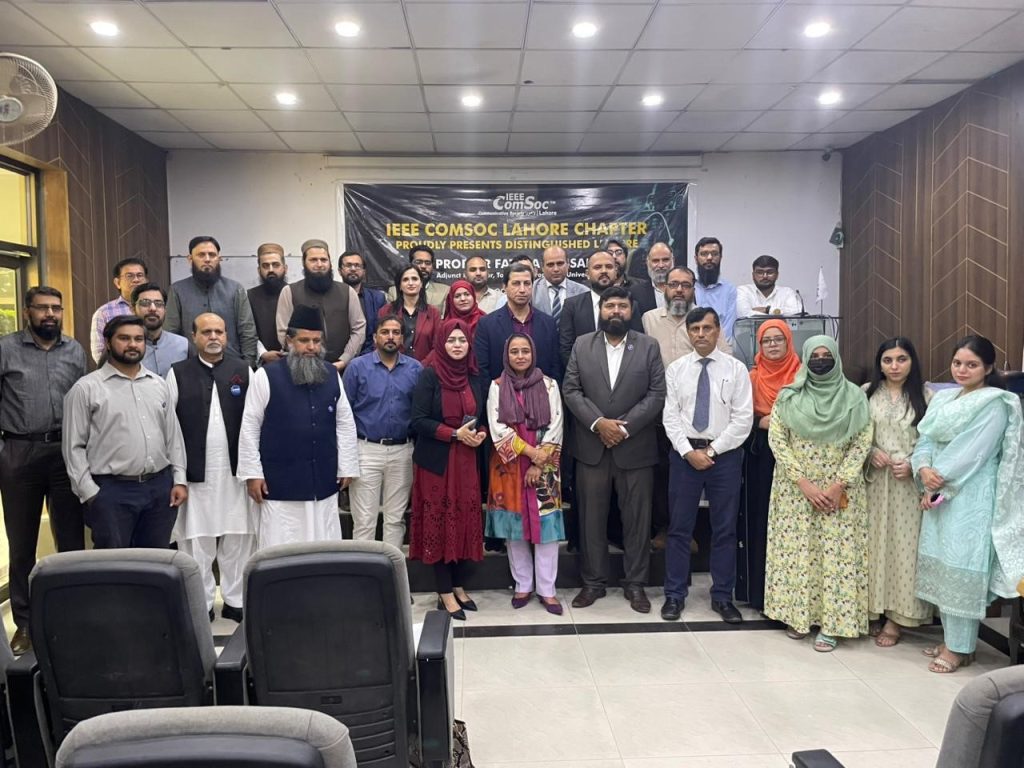
The event concluded with the presentation of shields and certificates of appreciation to the distinguished guests and organizing team. Participants, including students and faculty, received participation certificates, and the session ended with a group photo capturing the memorable collaboration. A lunch was served to all guests and faculty members, allowing further networking and discussion in a relaxed atmosphere.
Overall, the IEEE ComSoc Distinguished Lecture at UET Lahore was a resounding success, reflecting the strong academic spirit of the university, the leadership of IEEE ComSoc Lahore Chapter, and the inspiring contribution of Dr. Fatima Hussain toward shaping Pakistan’s cybersecurity future.
UET Lahore Hosts 8th IEEE ICECE 2025, Bringing Together Global Experts to Foster Collaboration and Innovation in Energy Conservation and Efficiency
The 8th IEEE International Conference on Energy Conservation and Efficiency (ICECE 2025), organized by the Centre for Energy Research and Development (CERAD) at the University of Engineering and Technology (UET) Lahore, concluded with an inspiring call for global collaboration, innovation, and actionable strategies to address the energy challenges facing Pakistan and the world. The conference brought together leading experts, researchers, and industry professionals from across the globe to explore cutting-edge solutions in energy conservation and efficiency.
The opening ceremony, held at UET Lahore, was graced by Professor Dr. Waqar Mahmood, Chair of the conference and former Director of CERAD, who attended as the Chief Guest. In his keynote address, Dr. Waqar highlighted the evolution of the conference and emphasized the importance of strategic collaboration between academia and industry to translate research into practical solutions and equip youth with the skills needed to overcome Pakistan’s energy challenges.
This year’s edition of ICECE marked a significant milestone in its journey as one of Pakistan’s premier research platforms for sustainable energy innovation. The two-day event brought together top researchers, industrial experts, and policymakers from countries including Pakistan, the United States, Saudi Arabia, China, Malaysia, Oman, South Korea, the United Kingdom, Italy, Morocco, and India.

A total of 47 research papers were submitted, out of which 16 high-quality papers were accepted for presentation, reflecting a 34% acceptance rate—a strong testament to the conference’s commitment to academic excellence. The program also featured national and international invited talks covering breakthroughs in renewable energy, artificial intelligence applications in energy systems, and sustainable industrial practices.
The technical sessions of ICECE 2025 encompassed diverse topics such as AI-driven optimization in cloud systems, electric vehicle infrastructure, green innovation, waste-to-energy solutions, and adaptive energy monitoring systems. Researchers from renowned institutions worldwide contributed to the rich exchange of ideas.
Industrial collaboration remained a central focus of ICECE 2025, strengthened by the support of technical co-sponsors and industry partners dedicated to advancing Pakistan’s transition toward clean energy and carbon neutrality.
ICECE 2025 once again reaffirmed leadership in advancing research, innovation, and knowledge in the field of energy conservation and efficiency, inspiring global researchers to continue developing sustainable solutions for a greener and more resilient future.