Latest News
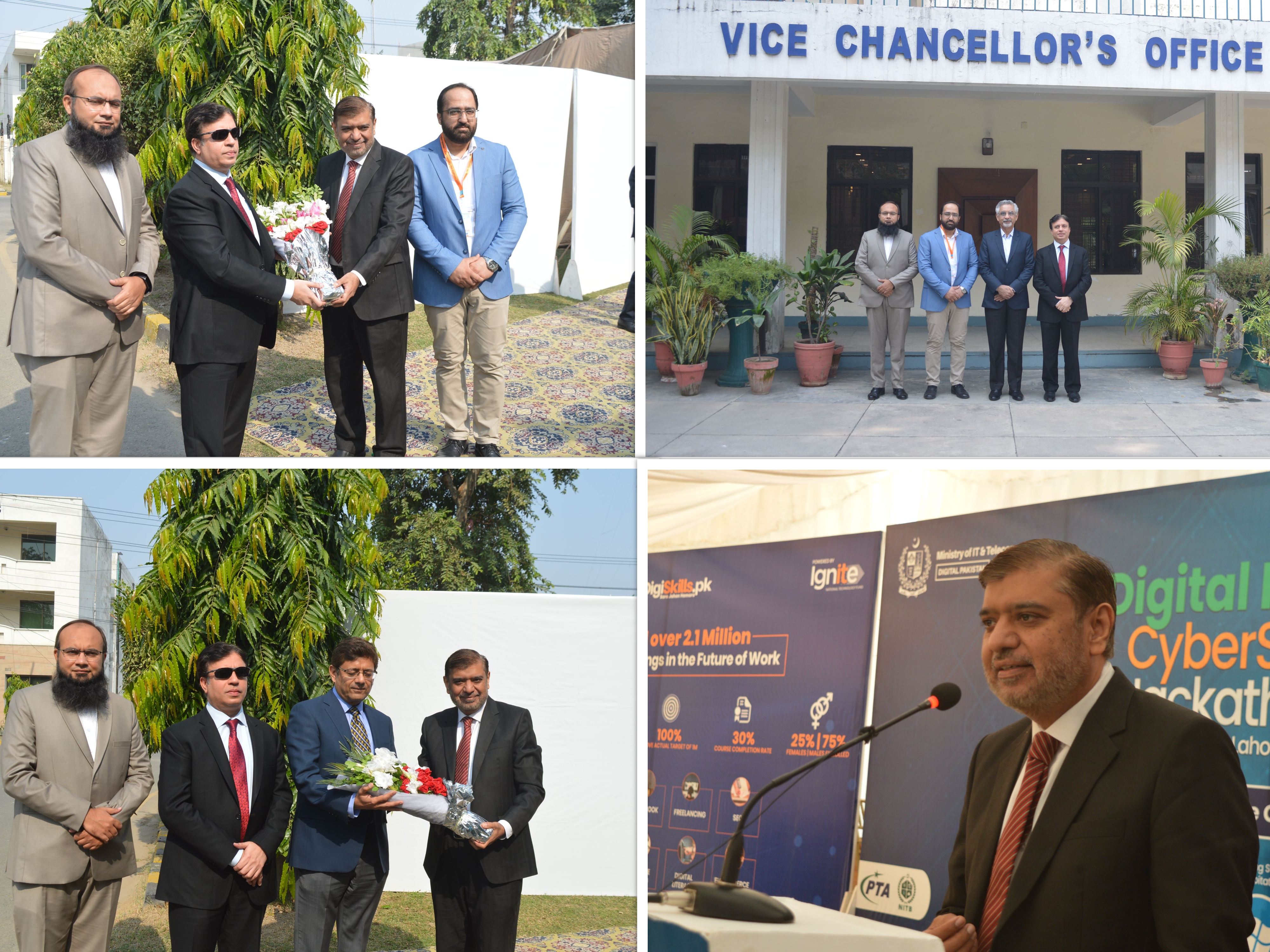
Ignite launched Pakistan’s first nationwide Digital Pakistan Cybersecurity Hackathon
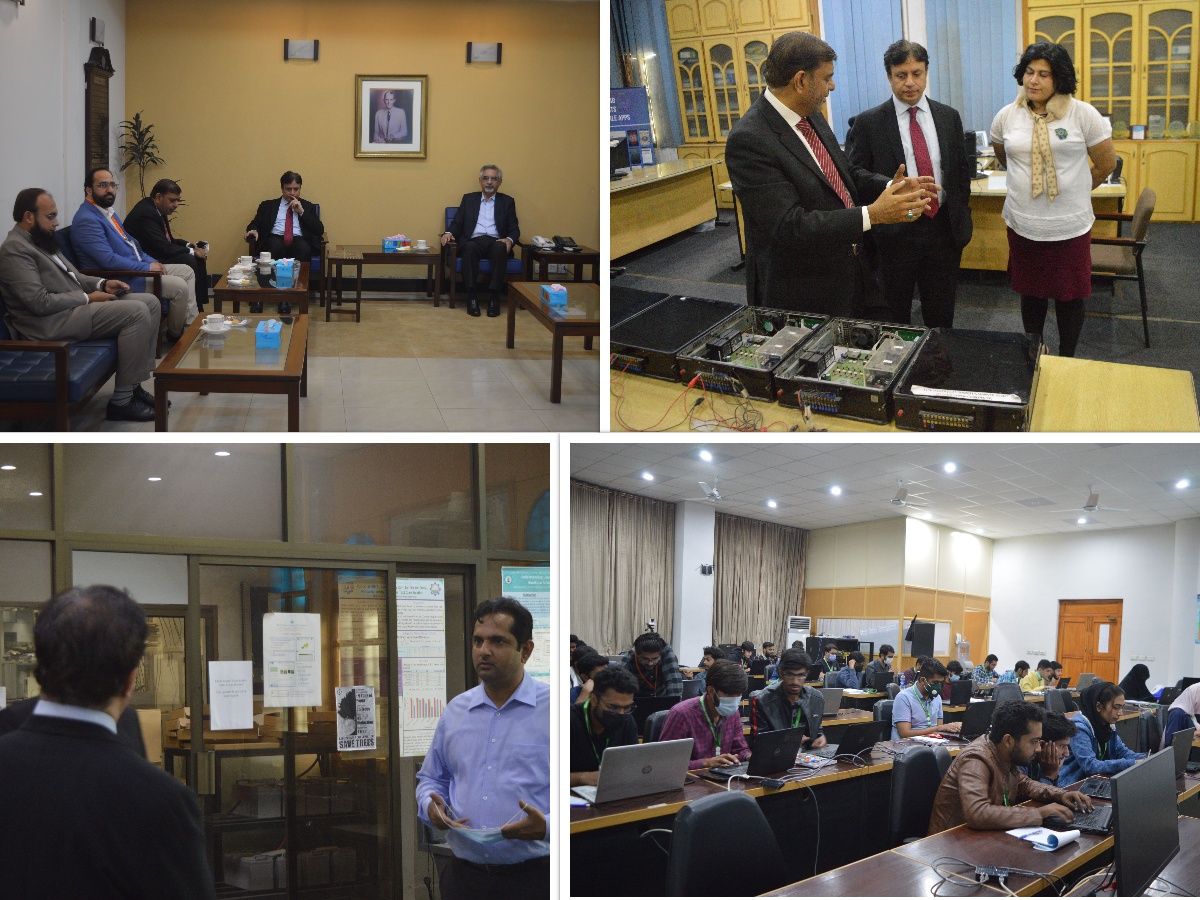
School of Media Studies (SMS), KICS UET, Lahore’s signature Diploma in News Anchoring goes online
Many people want to be in the media field or to become an Anchor but not everyone has a way to get some training. School of Media Studies (SMS) trains those people but there are some students who belong to remote areas and cannot take physical classes coming on campus, SMS has started an online Professional Diploma in News Anchoring for them. The online course is conducted in the state-of-the-art smart classroom situated in UET Lahore with a very entertaining environment, lucrative equipment including a smartboard, high-quality audio, and video gadgets. The smart classroom is set to impress and grab the attention of all and sundry in particular the students who want to learn the skills. It has been named ‘Weidong Smart Classroom’ supported by the Southern University of Science and Technology and China’s enterprises including Weidong Group, International Center for Higher Education Group under the auspices of UNESCO (ICHEI). This smart classroom is set to massification of higher education by improving the education quality and promoting equity in education through collaboration with UET Lahore.
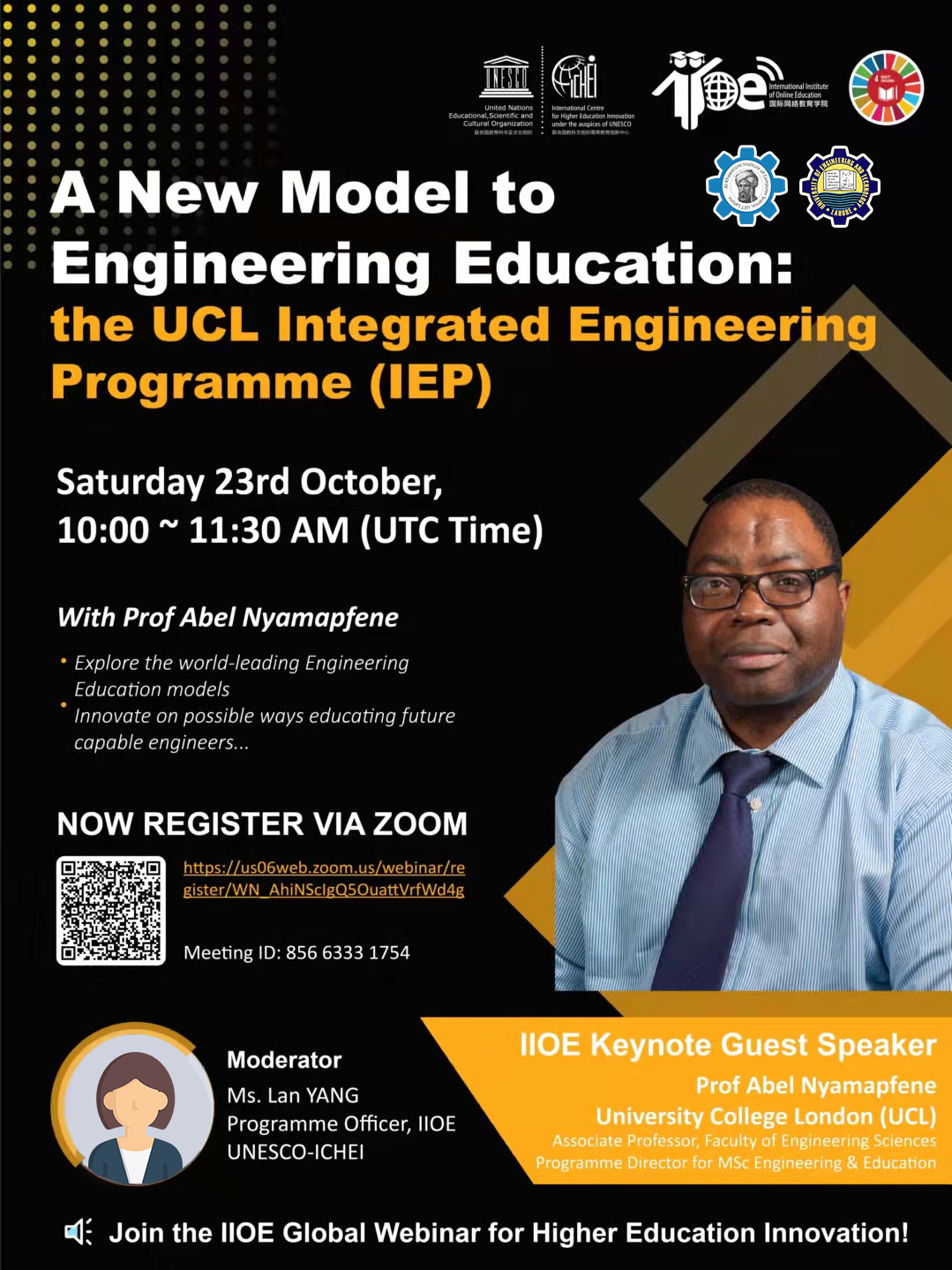
[IIOE Global Webinar] – A New Model to Engineering Education: the UCL Integrated Engineering Program (IEP)
Greetings from IIOE – UET Lahore!
Engineering Education, associated with technology, practice, and innovation, is placed at the heart of higher education digital transformation today in cultivating the C21 capable engineers.
- What are the emerging trends in today’s engineering education?
- How to prepare engineering graduates for work-ready engineering professionals?
- How to improve engineering education quality & effectiveness as a systematic approach?
This Saturday, IIOE has invited Prof Abel Nyamapfene from University College London (UCL) to guide us to explore the state-of-the-art engineering education practices!
Information
Topic: A New Model to Engineering Education: the UCL Integrated Engineering Programme (IEP)
Date : Saturday, October 23, 2021,
Time: 3:00 PM ~ 4:30 PM ( PKT | GMT+5 )
Language: English
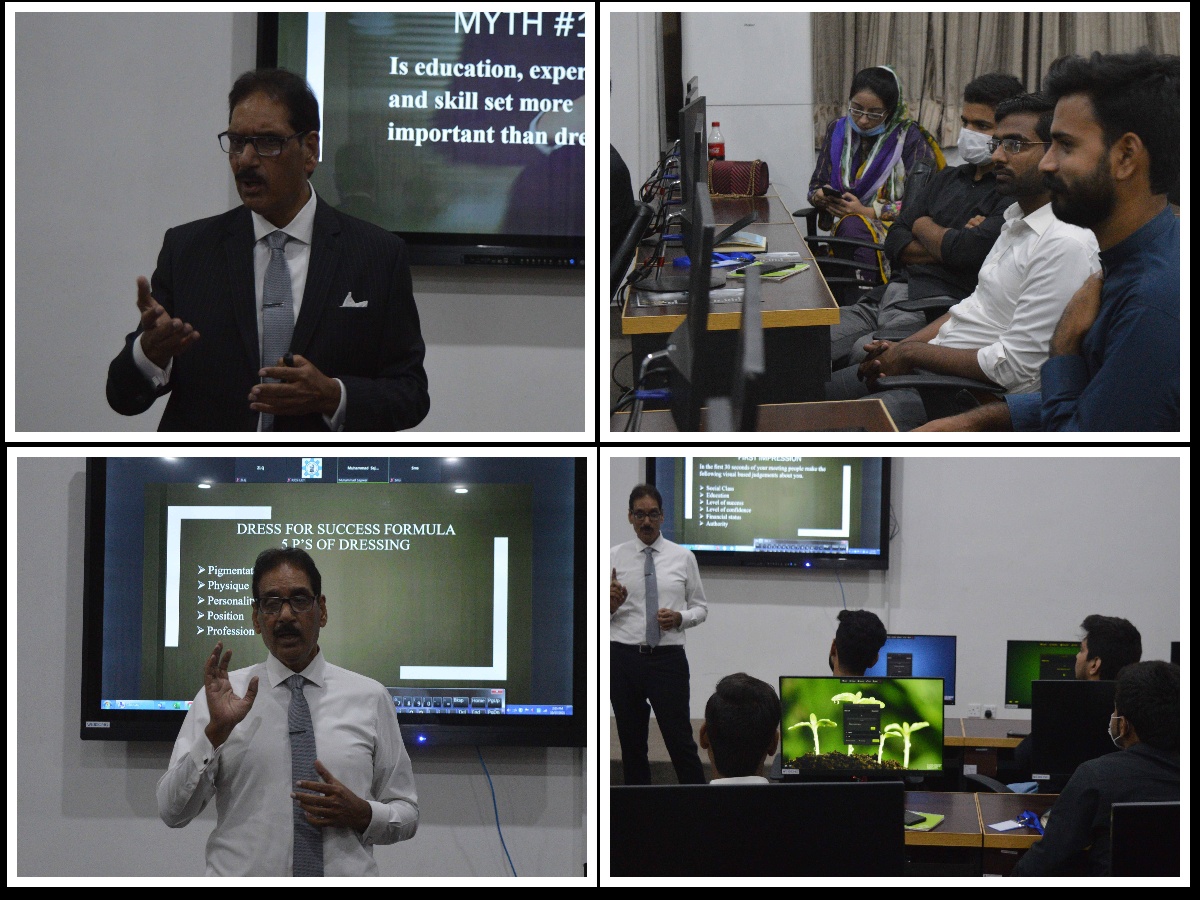
Personality Grooming Session by Image Consultant Mr. Hamid Saeed at SMS, UET Lahore
“I appreciate the participants who showed up to learn on a Sunday morning while most of the people were sleeping the extra hours on Sunday,” said Mr. Hamid Saeed, Image Consultant at the Personality grooming session for the students of Professional diploma in News Anchoring, School of Media Studies, (SMS) UET Lahore.
Hamid Saeed is a Pakistani American Image Consultant from New York. Over the last two decades, he has helped & dressed more than 500000 professional men & women including Gov of New York and top executives of Fortune 500 Companies executives. In Pakistan, Hamid Saeed is working as a visiting faculty at Pakistan Civil Services Academy, Punjab Judicial Academy, Govt Engineering Academy and he also conducts seminars/ training workshops at educational institutes and corporate sector.
It was a three-hour-long session in which he taught the students how media professionals should dress in both professional and everyday life. He also emphasized the students that proper clothing, appropriate for the environment in which they are working, can boost their confidence.
The session concluded with a productive Q & A session. In the end, team SMS presented Mr. Hamid Saeed with a shield as a token of appreciation.
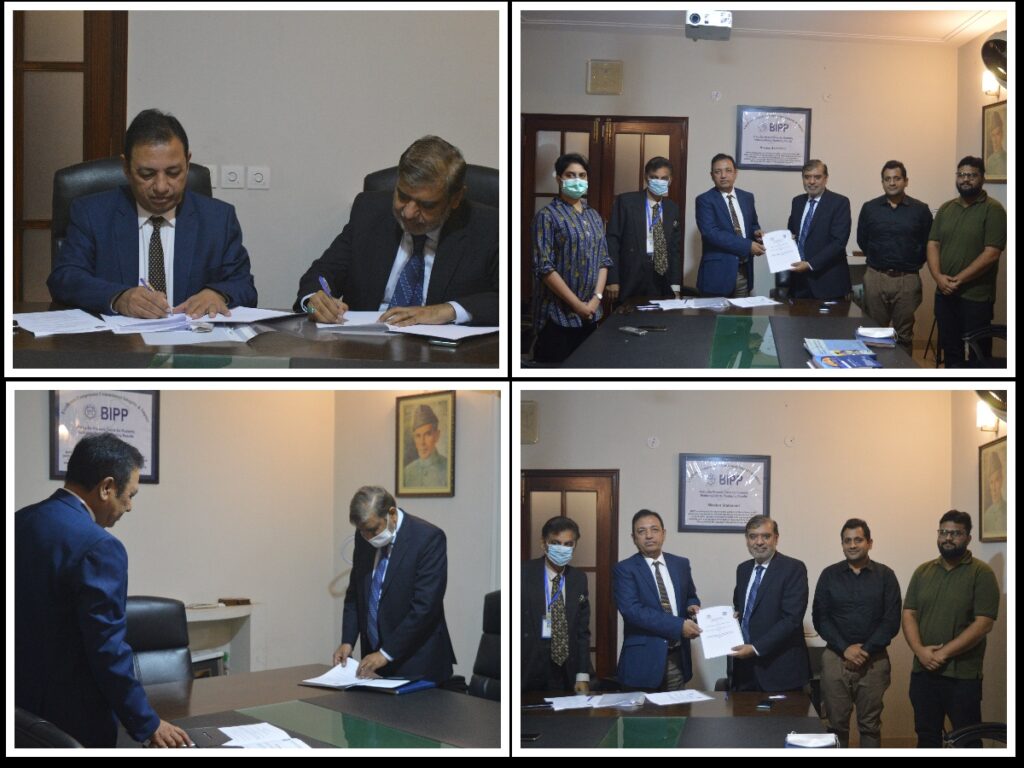
Al-Khawarizmi Institute of Computer Science (KICS), UET Lahore signed an MoU with Burki Institute of Public Policy at NETSOL (BIPP)
Virtual Summit on Artificial Intelligence in Information and Communication 2021
“AI becoming the part of everyday life and it is extremely important to grow in the field of AI so as to meet the need of the hour,” says Director KICS, Prof. Dr. Waqar Mahmood.
Artificial Intelligence is the basis for mimicking human intelligence processes through the creation and application of algorithms built into a dynamic computing environment. Simply, AI is trying to make computers think and act like humans. Today, the amount of data that is generated by both humans and machines for out spaces humans’ ability to absorb, interpret, and make complex decisions based on that data. AI forms the basis for all computer learning and is the future of all complex decision-making.
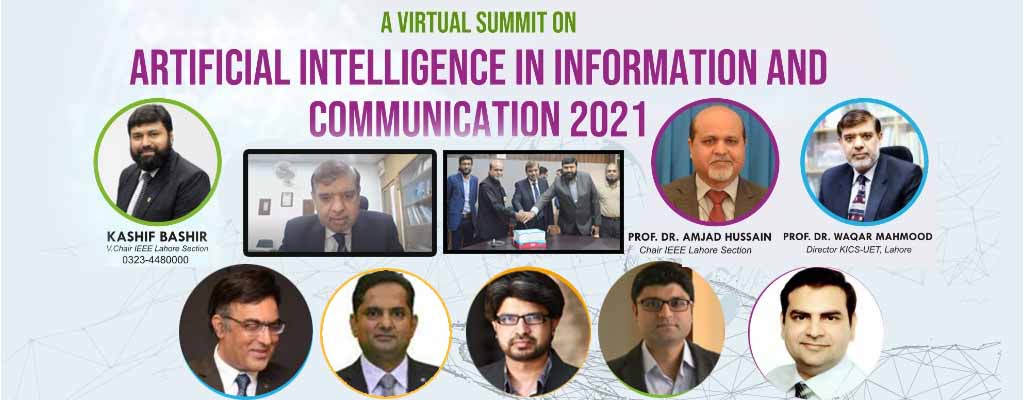
Al-Khawarizmi Institute of Computer Science (KICS) in collaboration with the IEEE Lahore Section organized a virtual summit on Artificial Intelligence in Information and Communication 2021. The summit was based on diversified domains comprising Networking Security & IoT, Image Processing & Multimedia, Healthcare, Control & Decision Systems, and Energy Storage. Every aspect of dedicated domains was discussed in great detail by the academic experts in each domain. Dr. Wajahat Qazi from Comsats Institute of Information and Technology (CIIT) was invited as a speaker to give thoughtful insights on Control and Decision Systems, Dr. Ijaz Haider Naqvi from Syed Babar Ali School of Science & Engineering, Lahore University of Management Science (LUMS) shared his work and experience in Data-driven techniques for Battery Health Degradation Analysis whereas Dr. Ubaid Ullah Fayyaz & Dr. Usman Ghani from UET Lahore, and Dr. Sheikh Faisal Rashid from Fast NUCES Islamabad were invited to talk on Artificial Intelligence for Cyber Security, Artificial Intelligence at the Intelligent Criminology Lab, KICS, and Applications of Artificial Intelligence in Healthcare respectively. The online summit was kicked off through CISCO WebEx and a great number of audiences from research and academia across the country participated online.
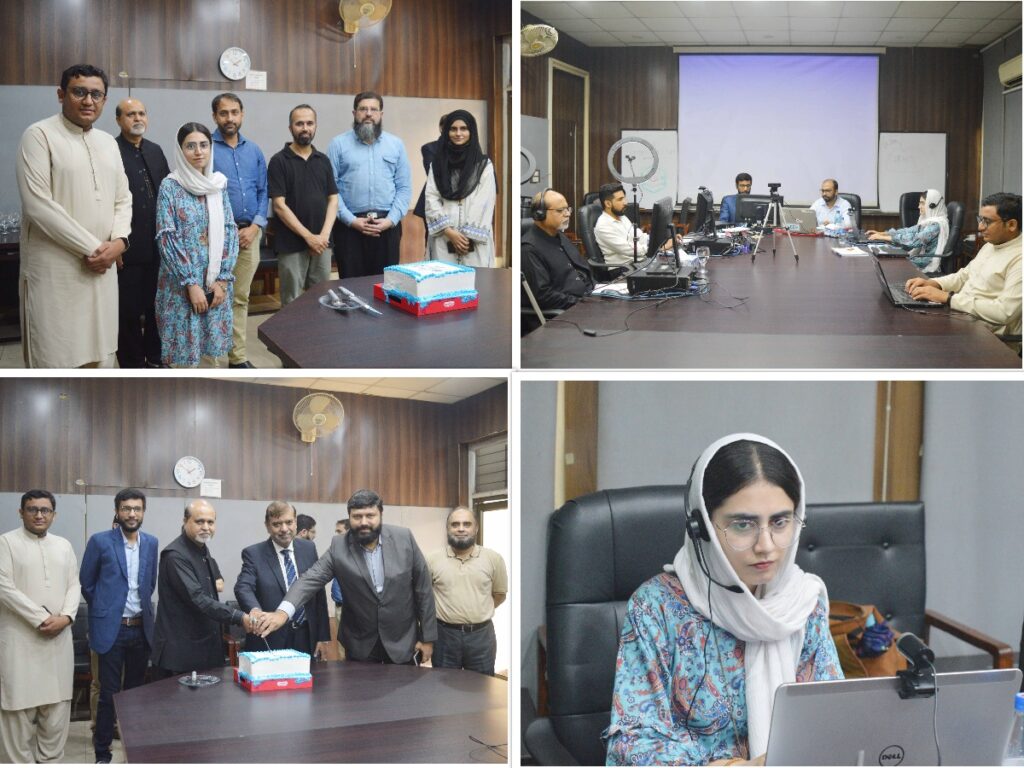
Dr. Waqar Mahmood, Director KICS in his welcome remarks paid special thanks to the guest panel and emphasized the emerging need of AI in daily life “This summit is very important in the sense that AI becoming the part of everyday life and it is extremely important to grow in the field of AI to meet the need of the hour” said Dr. Waqar Mahmood while speaking at the summit. Dr. Amjad Hussain, Chair IEEE Lahore Section briefed the audience with great achievements of IEEE Lahore Section with around 40 technical societies, 100 technical journals, and almost 1000 technical conferences. IEEE Lahore Section is geared up to collaborate and to maximize the potential. He also applauded Al-Khawarizmi Institute of Computer Science (KICS) for its commitment and dedication in the field of AI with more than 7 dedicated labs. While speaking on behalf of the IEEE Lahore Section Mr. Kashif Bashir, Vice-Chair IEEE Lahore expressed his remarks, we have witnessed fast developments of various AI technologies, and many forms of Information and Communication systems with AI are becoming a core part of our daily lives.
Prof. Dr. Muhammad Kamran, Dean Electrical Engineering Department, UET Lahore congratulated the management committee for organizing a great summit dedicated to AI while giving his closing remarks. He said, “AI is the key of all sciences right now, as the Dean of Electrical Engineering Department, I would like to work effectively with Dr. Waqar and Dr. Amjad in the area of Artificial Intelligence”.
All the guest speakers were presented with the virtual token of appreciation whereas, at the end of the summit, IEEE members celebrated IEEE Day along with Lahore section societies, Affinity Groups, and Subsection members following the cake cutting ceremony.
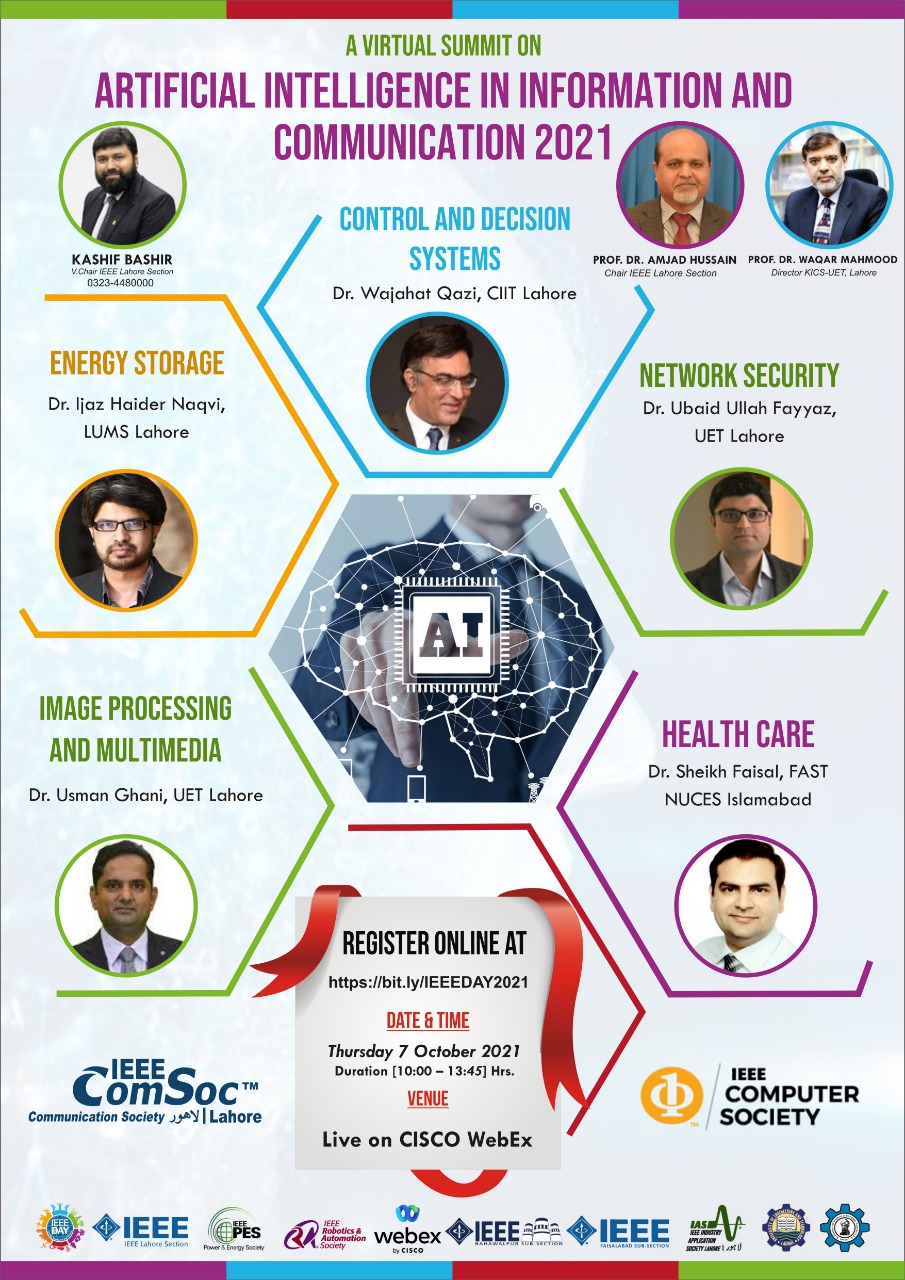
IEEE Lahore Section is organizing a virtual summit on “Artificial Intelligence in Information and Communication 2021” in collaboration of its technical societies, affinity groups & subsection.
Event will hold on IEEE Day 7 October 2021, 10AM online.
All IEEE members will also celebrate IEEE Day after the event. Lahore Section Societies, Affinity groups, Subsection members will also participate in this activity.
AI Summit includes following topics:
- AI Applications for Network security and IoT
- AI for Image Processing and Multimedia
- AI for Healthcare
- AI for Control and Decision Systems
- AI for Energy Storage
Speaker information:
Talk 1: Artificial Intelligence for Cyber security by Dr. Ubaid Ullah Fayyaz, UET Lahore
|
Name |
Dr. Ubaid Ullah Fayyaz |
|
Affiliation: |
UET Lahore |
|
Invited Talk: |
Artificial Intelligence for Cyber security |
|
Abstract: |
Internet of Things (IoT) describes the network of physical objects—“things”—that are embedded with sensors, software, and other technologies for the purpose of connecting and exchanging data with other devices and systems over the internet. These devices range from ordinary household objects to sophisticated industrial tools. With more than 7 billion connected IoT devices today, experts are expecting this number to grow to 22 billion by 2025. Despite the IoT devices helping us in a lot of areas, these devices have negligible or very limited security features. These security pitfalls make it easy for hackers to exploit these insecure IoT devices and get control over them. Among the recently reported cyber-attacks, botnet and distributed denial of service (DDoS) attacks are the most prevalent attacks, which have increased both in frequency and magnitude over the last decade. The traditional security solutions like firewalls, IDS, etc. are unable to detect the complex DoS and DDoS attacks as most of them filter the normal and attack traffic based upon the static predefined rules. In this talk, we will present our work in which we have augmented current security solutions with artificial intelligence (AI) based techniques to increase the reliability and effectiveness of mitigating these attacks. |
|
Biography |
Ubaid Fayyaz received the B.S. degree in electrical engineering from the University of Engineering and Technology, Lahore, Pakistan in 2005, and the M.S. and Ph.D. degrees in electrical engineering from the Georgia Institute of Technology, Georgia USA, in 2012 and 2014, respectively. His doctoral research devised iterative decoding architectures for polar codes in magnetic recording. From 2006 to 2009, he worked at the Center for Advanced Research in Engineering Islamabad, Pakistan, where he was responsible for the algorithm design and FPGA-based implementations of communication systems. He is currently an assistant professor at the department of electrical engineering, the University of Engineering and Technology, Lahore, Pakistan and a consultant at Al-Khawarizmi Institute of Computer Sciences. His current research interests include coding theory, cyber security, information theory and signal processing. He is the recipient of the William J. Fulbright, the Water and Power Development Authority Pakistan, and the National Talent scholarships. |
Talk 2: Artificial Intelligence at the Intelligent Criminology Lab, National Center of Artificial Intelligence by Dr. Usman Ghani, UET Lahore
|
Name |
Prof. Dr. Muhammad Usman Ghani Khan |
|
Affiliation: |
UET Lahore |
|
Invited Talk: |
Artificial Intelligence at the Intelligent Criminology Lab, National Center of Artificial Intelligence |
|
Abstract: |
Dr Usman will provide case studies related to use of Artificial Intelligence technologies in the area of computer vision, text processing, bioinformatics, and data science. Main vision of his work is to enthusiastically practice innovation and development while offering value added products and services that enhance the quality of work and life. His talk will showcase his recent work in the Intelligent Criminology Lab under National Center of Artificial Intelligence at KICS, UET Lahore. |
|
Biography |
Prof. Dr. Muhammad Usman Ghani Khan has over 15 years of research experience specifically in the areas of artificial intelligence, |
Talk 3: Applications of Artificial Intelligence in Healthcare by Dr. Sheikh Faisal, FAST NUCES Islamabad
|
Name |
Dr Sheikh Faisal Rashid |
|
Affiliation: |
FAST NUCES Islamabad |
|
Invited Talk: |
Applications of Artificial Intelligence in Healthcare |
|
Abstract: |
Recent advances of AI in healthcare present extraordinary opportunities in many areas like clinical assessment, automated diagnostic, rehabilitative, surgical, and predictive practices. A critical application area where AI can make an impact is assistance in the clinical decision-making process and help in disease diagnosis. For example, applications of deep learning are now very common in distinguishing between benign nevi vs. melanoma, inflammatory dermatoses, psoriasis, predicting skin sensitization substances, and differential diagnosis of skin diseases. Deep learning strategies can be applied to a large amount of data across different modalities to detect diseases, find new information that remains hidden in the mass of medical big data, identify new drugs for health services management, patient care treatments and guide clinical decisions. In this talk we will explore different applications of AI in healthcare and available deep learning systems. |
|
Biography |
Dr Sheikh Faisal Rashid obtained the Doctor of Engineering (Dr.-Ing.) from the University of Kaiserslautern (TUKL), Kaiserslautern Germany. He did his post-doc at Siemens Konstanz, Germany and worked as a Senior Researcher/Project Lead at the German Research Center for Artificial Intelligence (DFKI) Kaiserslautern Germany. Currently, he is working as Co-Principal Investigator of Intelligent Criminology Lab at National Center of Artificial Intelligence (NCAI) and AI consultant at Al-Khwarizmi Institute of Computer Science UET Lahore. Recently, he joined the National University of Computer and Emerging Sciences as an Assistant Professor. He is also serving as a vice president of the Pakistan Pattern Recognition Society (PPRS) which is officially affiliated with the International Association of Pattern Recognition (IAPR). His area of interest includes Artificial Intelligence, Deep Learning, Thermal Imaging, Document Image Analysis, OCR, Natural Language Processing, and Information Extraction. |
Talk 4: Data-driven techniques for battery health degradation analysis by Dr. Ijaz Haider Naqvi, LUMS Lahore
|
Name |
Dr. Ijaz Haider Naqvi |
|
Affiliation: |
LUMS Lahore |
|
Invited Talk: |
Data-driven techniques for battery health degradation analysis |
|
Abstract: |
The performance of lithium-ion batteries degrades over its lifetime, and its degradation is typically studied as a function of the number of charge-discharge cycles. There is enormous variability in the lifecycles of different Li-ion batteries depending on their chemistry and manufacturing process. Furthermore, prediction of lifetimes based on the characterization and reliability data in the early life of the battery can provide important information to the cell and system manufacturers. Battery aging is a time-consuming process and a typical cell that may last for 5000 cycles and would take more than a year before it reaches its end of life. Therefore, it is essential to reduce this time to market by estimating the future performance by looking at the initial testing data. This talk will focus on the ongoing research on the aging and degradation analysis of lithium ions. The equivalent circuit models for the battery are used to predict the state of charge of the battery. However, they are rarely employed for the state of health estimation. This talk explains how the equivalent circuit model and Arrhenius equation can be used to capture the degradation of battery cells over time. In addition to battery diagnostics, we will also present our initial results on battery prognostics or remaining useful life estimation using machine and deep learning techniques. We show that incorporating memory-based features can help improve estimation accuracy considerably. |
|
Biography |
Ijaz Haider Naqvi received the B.Sc. degree in electrical engineering from the University of Engineering and Technology Lahore, Pakistan, the Master’s degree in radio communications from SUPELEC Paris, France, and the Ph.D. degree in electronics and telecommunications from IETR-INSA Rennes, France in 2003, 2006, and 2009, respectively. He worked as a visiting Associate Professor at the University of Maryland College Park from November 2018 to August 2019 where he worked on the reliability and health degradation of lithium ion batteries and other electronics. He is currently an Associate Professor at the School of Science and Engineering, Lahore University of Management Sciences (LUMS) Lahore, Pakistan. He has got several years of research experience in wireless communications and wireless sensor networks. His current research focuses on 5G networks and beyond including system-level aspects in wireless networks, millimeter wave wireless systems for 5G and 6G telecommunication and multi-antenna radar systems for civilian applications. He also works in the area of reliability engineering investigating the degradation and aging of electronics especially Li-ion batteries. He has published several refereed papers in international journals and peer-reviewed international conferences. |
Talk 5: Building Machines with Cognition by Dr. Wajahat Qazi, CIIT Lahore
|
Name |
Dr. Wajahat M. Qazi |
|
Affiliation: |
COMSATS Lahore |
|
Invited Talk: |
Building Machines with Cognition |
|
Abstract: |
Development of conscious machines requires the implementation of artifacts that might enable an agent to formulate, represent and regulate its actions and behaviors in diverse environment. Regulation involves the rehearsal of all possibilities considering emotional state and goals before execution of motor actions. It also means that an agent should be able to manipulate information that is not directly perceived through sensory stimuli. In order to incorporate these abilities an agent is require to be constructed with cognitive memories, sensory system, sensory integration, emotion, drives, motivations and action regulatory system. This study proposes a method to formulate machine imagination. |
|
Biography |
Assistant Professor In charge Intelligent Machines and Robotics Department of Computer Science, CUI Lahore |
|
A Summit on Artificial Intelligence in Information and Communication 2021 |
|
Thursday 7 October 2021 |
|
Duration [10:00 – 13:00] Hrs. |
|
Time |
Activity |
|
[10:00 – 10:05] 5 min |
Recitation of Holy Quran |
|
[10:05 – 10:10] 5 min |
National Anthem |
|
[10:10 – 10:20] 10 min |
Welcome Note by: Prof. Dr. Waqar Mahmood Director, KICS UET Lahore |
|
[10:20 – 10:25] 5 min |
Remarks by: Prof. Dr. Amjad Hussain Chair IEEE Lahore Section |
|
[10:25 – 10:30] 5 min |
Remarks by: Mr. Kashif Bashir Vice Chair IEEE Lahore Section |
|
[10:30 – 11:00] 30 min |
Artificial Intelligence for Cyber security Dr. Ubaid Ullah Fayyaz, UET Lahore |
|
[11:00 – 11:30] 30 min |
Artificial Intelligence at the Intelligent Criminology Lab, National Center of Artificial Intelligence Dr. Usman Ghani, UET Lahore |
|
[11:30 – 12:00] 30 min |
Applications of Artificial Intelligence in Healthcare Dr. Sheikh Faisal, FAST NUCES Islamabad |
|
[12:00 – 12:30] 30 min |
Data-driven techniques for battery health degradation analysis Dr. Ijaz Haider Naqvi, LUMS Lahore |
|
[12:30 – 13:00] 30 min |
Building Machines with Cognition Dr. Wajahat Qazi, CIIT Lahore |
|
[13:00 – 13:05] 5 min |
Remarks by: Prof. Dr. Muhammad Kamran Dean EE UET Lahore |
|
IEEE Day Celebration & IEEE Lahore Section Meeting |
|
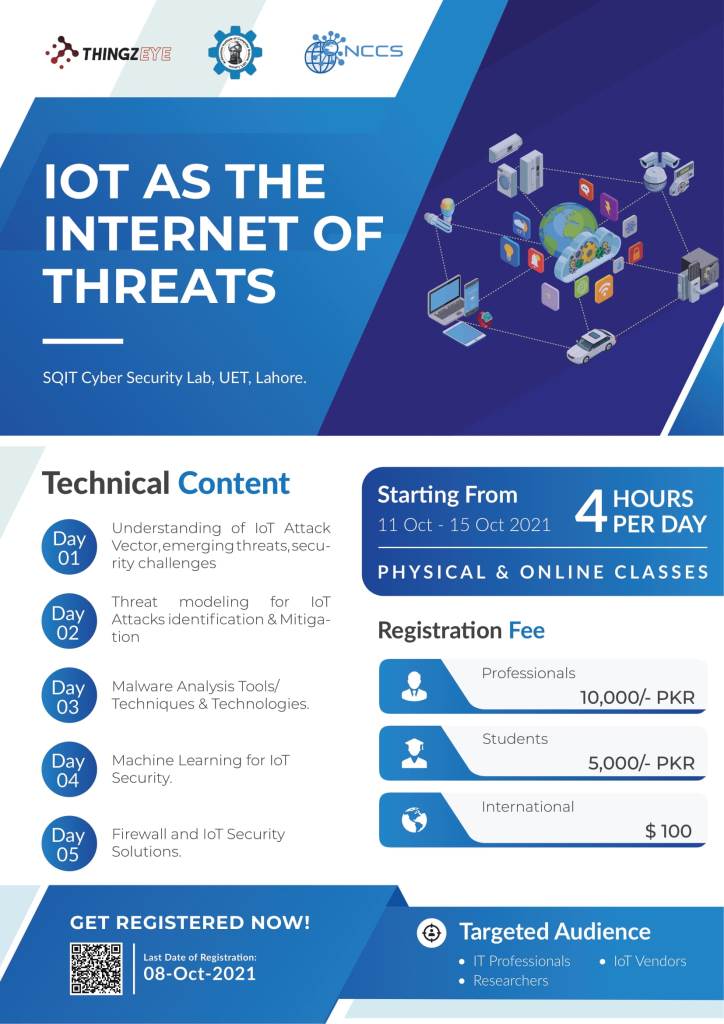
Physical & online five days training workshop on “IOT as the Internet of Threats”
[IIOE Global Webinar] – Improving Student Engagement in Technology-Mediated Environment
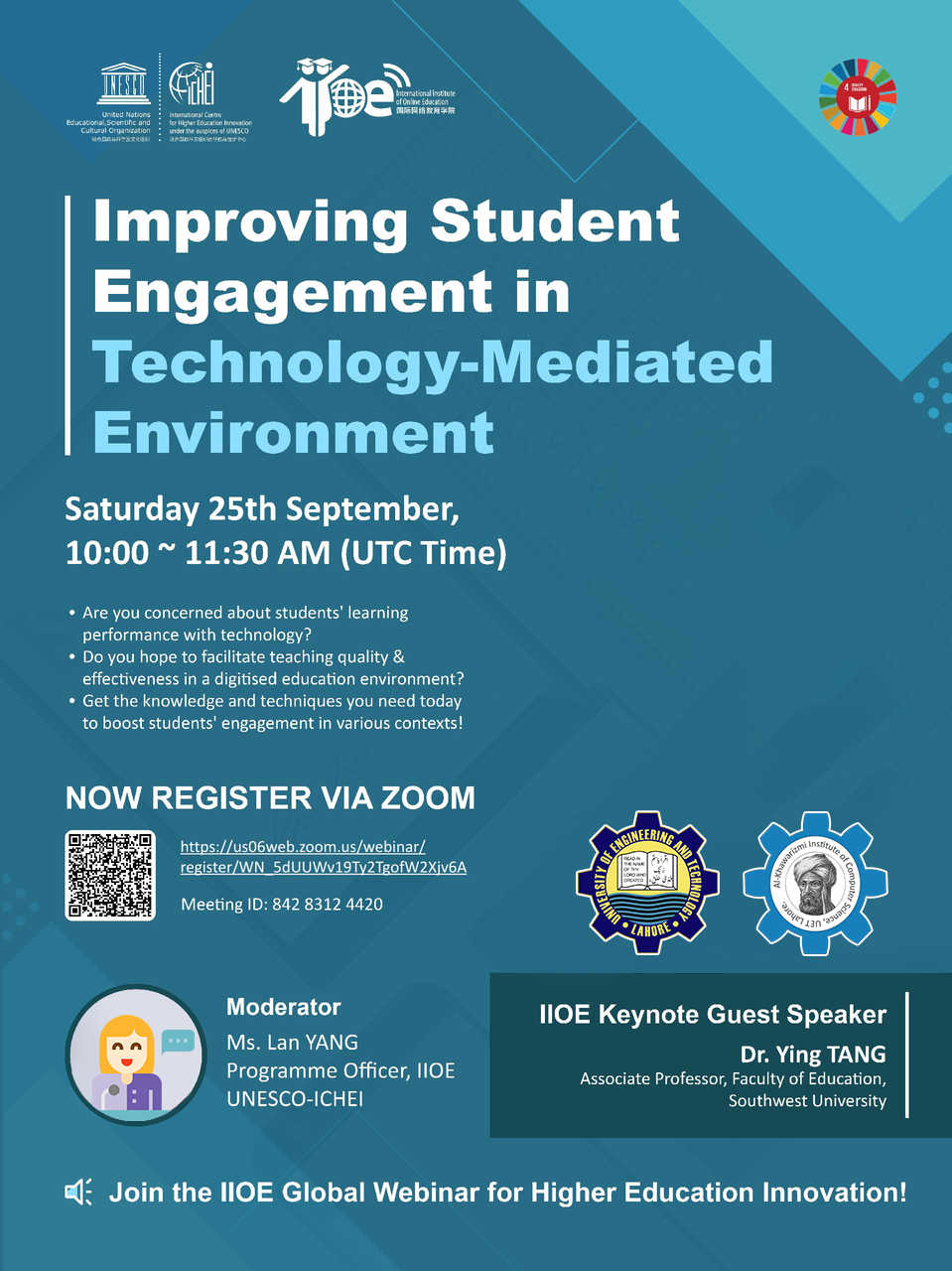
- Are you concerned about students’ learning performance with technology?
- Are you curious about the theories behind different online learning behaviors?
- Do you hope to facilitate teaching quality & effectiveness in a digitized education environment?
This Saturday, International Institute of Online Education (IIOE) will organise a new webinar session themed ‘Improving Student Engagement in Technology-Mediated Environment’, the details are as follows:
Certificate Distribution Ceremony of IIOE Multilevel Training on Big Data General Level on 16th September 2021
“We might not be able to fully get away with COVID restrictions very soon and the situation demands from educators to develop online content” says Vice Chancellor UET Lahore Prof. Dr. Syed Mansoor Sarwar while speaking at the IIOE training completion and certificate distribution ceremony.
Since its inception in the year 2020, IIOE has gradually developed into an educational platform that provides university staff with open and free ICT-related quality resources, and effective consultation and support to the academic crisis of HEIs caused by the global pandemic. UET Lahore, being chair, is trying to create content on IIOE related to teacher professional development in line with the local demand of the country. For that matter, UET is geared up in getting its faculty and teachers hands on to the IIOE platform for its effective usage. Besides working at an institutional level, expansion of IIOE partnership among HEIs, enterprises, organizations, and government bodies within their own network also promotion of IIOE adoption and influence at provisional and national levels is on cards.
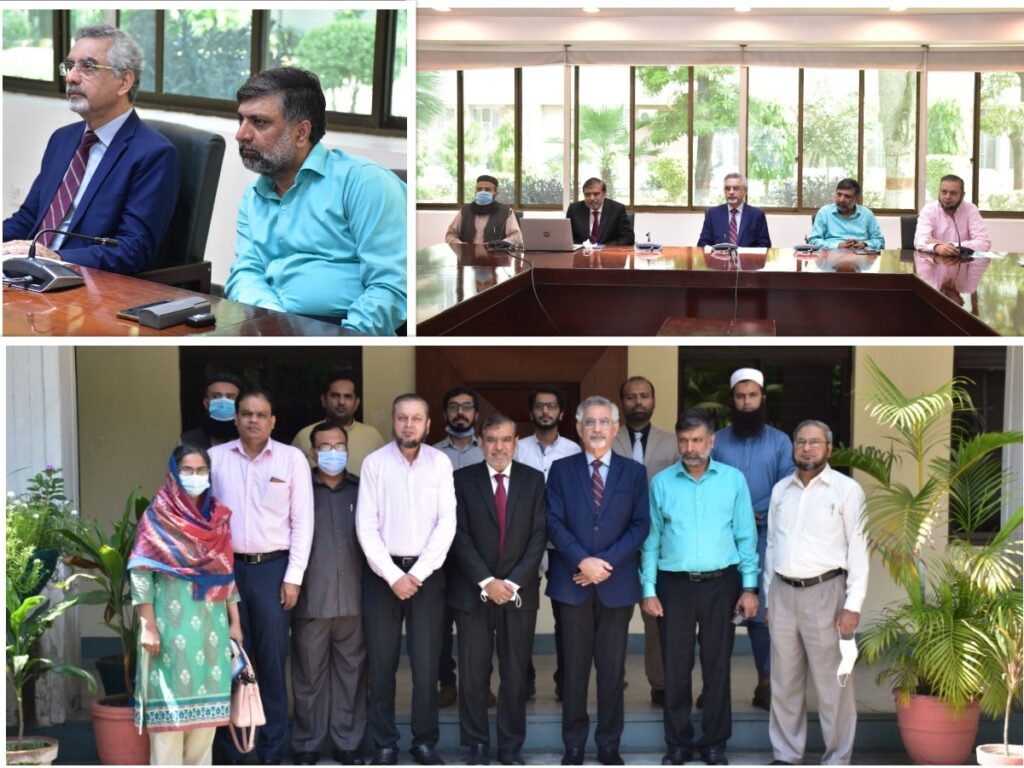
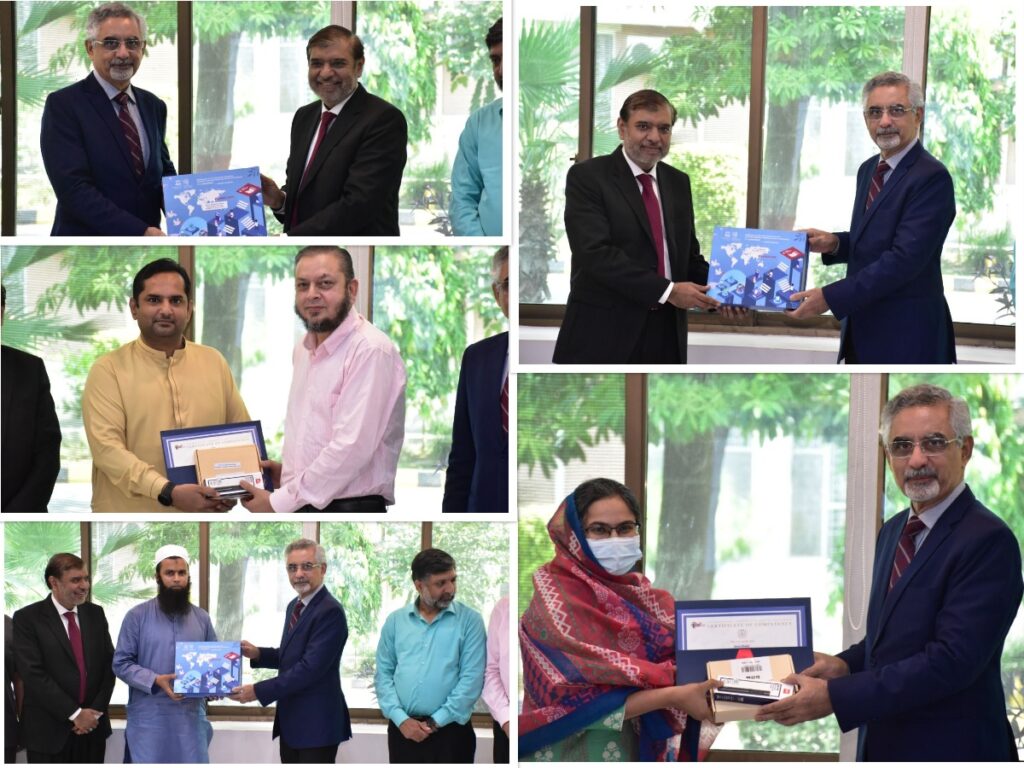
With a mission to empower university educators and professionals with data literacy, IIOE multilevel training series (Big Data General Level) was kicked off on September 28,2020. Training completion certificates & Gifts distribution ceremony for UET participants was organized at Vice Chancellor’s conference room. Vice Chancellor and chair IIOE Prof. Dr. Syed Mansoor Sarwar, Director KICS Dr. Waqar Mahmood, Dean Faculty of Chemical Engineering Dr. Naveed Ramzan, Dean Faculty of Electrical Engineering Dr. Muhammad Kamran, Dean Faculty of Natural sciences, humanities and Islamic studies Dr. Shahid Rafique, Dean Faculty of Mechanical Engineering Dr. Nadeem Mufti, Dean Faculty of Earth Sciences & Engineering Dr. Zubair Abubakar, Dean Faculty of Architecture Dr. Rizwan Hameed, Dean Faculty of Civil Engineering Dr. Habib ul Rehman and Faculty members graced the occasion with their presence.
Director KICS, Dr. Waqar Mehmood briefed the participants with some thoughtful insights of IIOE-UET Lahore partnership and milestones that have been achieved under this collaboration. While speaking at the ceremony, Vice Chancellor UET Lahore and Chair IIOE Prof. Dr. Syed Mansoor Sarwar stressed the importance of active participation from faculty and asked deans to disseminate the message strongly among their faculty and research staff. We might not be able to fully get away with COVID restrictions very soon and the situation demands from educators to develop online content.
Dr. Mansoor while speaking as a chief guest of the ceremony expressed his greeting to the successful participants and specially thanked Dr. Waqar Mehmood and his team for putting in efforts to make it happen successfully.
At the end, certificates along with gifts from IIOE were distributed among participants and dignitaries. The ceremony was concluded with a group photo of participants with the distinguished guests.
Online five days training on “Machine Learning with Python”
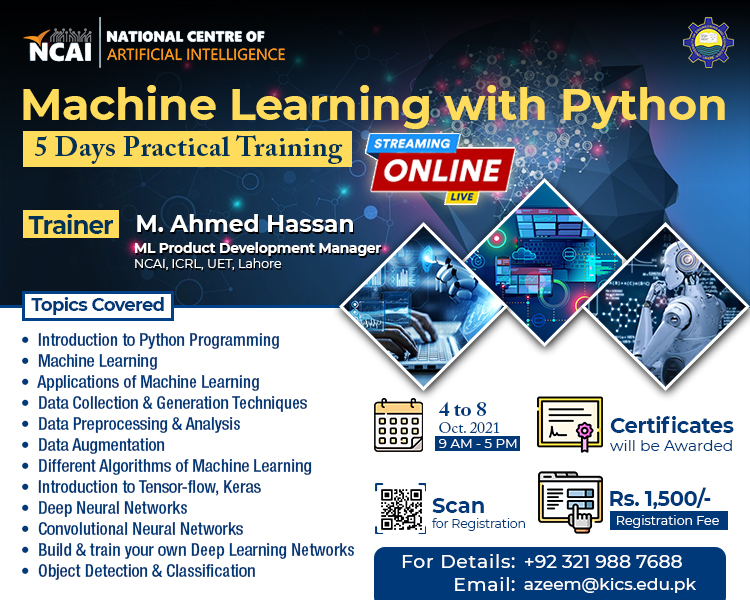
Under the umbrella of the National Center of Artificial Intelligence (NCAI), Intelligent Criminology Research Lab (ICRL), based at the University of Engineering and Technology (UET), Lahore is going to organize an online five days training for all enthusiasts in Advance Python, Machine Learning, Deep Learning, Artificial Intelligence, Data Science etc.
“Machine Learning with Python”
The training session will be live starting from 4th October to 8th October, 2021 from 09:00 am – 5:00 pm.
We are extending our invitation to everyone to join this interesting future-oriented training.
Let’s learn together:
• Introduction to Python Programming
• Machine Learning
• Applications of Machine Learning
• Data Collection and Generation Techniques
• Data Preprocessing and Analysis
• Data Augmentation
• Different Algorithms of Machine Learning
• Introduction to Tensor-flow, Keras
• Deep Neural Networks
• Convolutional Neural Networks
• Build and train your own Deep Learning Networks
• Object Detection and Classification
And much much more!
Click on the link below to get yourself registered. You will be notified prior to the commencement of training.
We are excited to have you at the training!